
In our previous article, we talked about turning end-of-summer clutter into quick cash by taking a closer look at valuables sitting unused around the house. But once you’ve opened that jewelry box or discovered a collection of old coins, another question naturally follows: What are those items actually worth?
For many people in Smyrna, Georgia, gold and silver are among the most recognizable valuables they own. They may have been purchased as gifts, inherited from relatives, collected over the years, or simply forgotten in a drawer.
Yet knowing that something is made of gold or silver doesn’t automatically tell you its value.
At Smyrna Pawn, understanding the basics of precious metals can help you make more informed decisions about whether to keep, sell, or pawn your valuables.
Whether you want quick cash for an unexpected expense, are considering selling jewelry you no longer wear, or simply want to understand what you own, a little knowledge goes a long way.

Why Gold and Silver Continue to Hold Value
Gold and silver have played important roles in commerce, jewelry, and personal wealth for centuries.
Unlike many everyday consumer products, precious metals have an established market value based on global supply and demand.
Gold is especially prized for its rarity, durability, and resistance to corrosion. It is used in jewelry, technology, and investment products, and it is held by central banks and investors around the world.
Silver also has a long history as a precious metal. In addition to jewelry and investment products, silver has extensive industrial applications, including electronics, solar technology, and other manufacturing processes.
These different uses influence how each metal is priced.
Both gold and silver prices fluctuate. Their values can be affected by economic conditions, investor demand, currency movements, interest rates, industrial activity, and other market factors.
This means the value of an item containing gold or silver can change over time, even if the item itself remains exactly the same.
However, an important distinction exists between the market price of a precious metal and the amount a buyer may offer for a particular piece of jewelry.
Understanding that difference is essential before you sell to a pawn shop.
What Determines the Value of Gold Jewelry?
Not all gold jewelry contains the same amount of pure gold.
Gold purity is commonly measured in karats, with 24-karat gold representing nearly pure gold.
Jewelry is often made with gold mixed with other metals because pure gold is relatively soft.
Here are some common gold purity levels:
Gold marking | Approximate gold content |
|---|---|
10K | 41.7% |
14K | 58.3% |
18K | 75% |
22K | 91.7% |
24K | 99.9% or higher |
For example, a 14K gold necklace contains less pure gold than an 18K necklace of the same weight.
However, purity is only part of the equation.
The weight of the item, current gold prices, condition, gemstones, craftsmanship, and potential resale demand may also affect an offer.
A heavy gold bracelet could contain more precious metal than a lightweight ring. A designer piece might have resale value beyond its gold content. Conversely, damaged jewelry may be evaluated primarily for its recoverable precious metal.
This is why an in-person evaluation can be valuable.
Rather than guessing based on the appearance of an item, a buyer can assess its characteristics and determine whether to make an offer.
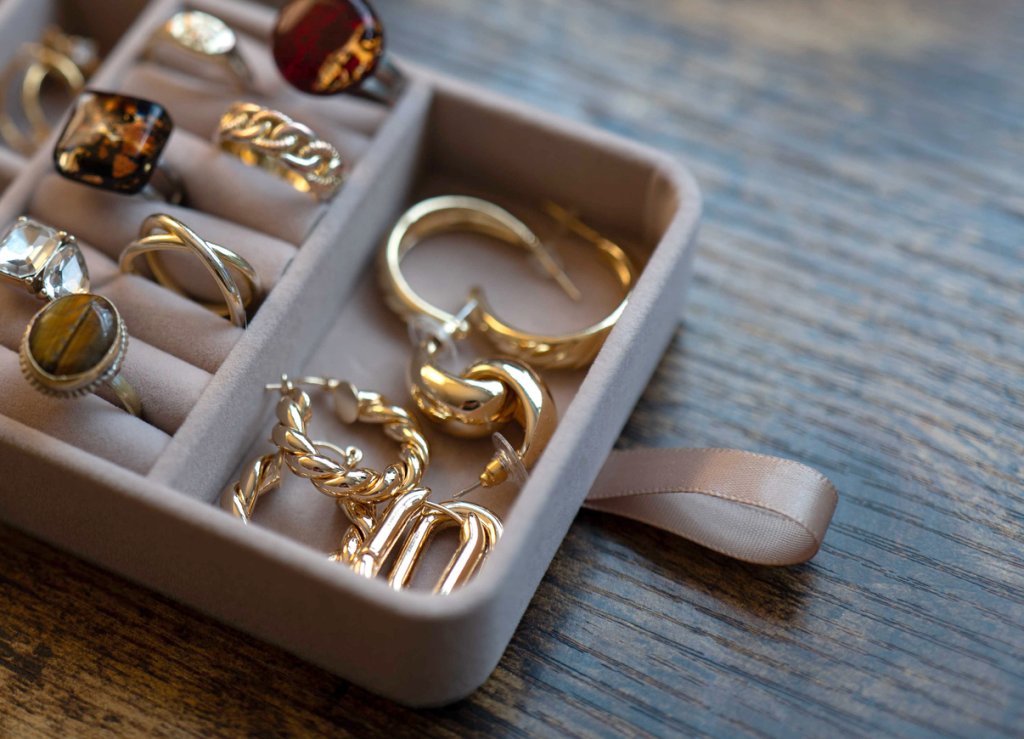
Is Your Jewelry Real Gold?
Many people have jewelry they believe is gold but aren’t completely sure.
Fortunately, there are a few clues that may help you begin identifying it.
Look inside rings, near necklace clasps, or on bracelet closures for markings such as 10K, 14K, 18K, or numerical stamps like 417, 585, and 750.
These markings often indicate the gold purity.
However, stamps aren’t absolute proof. Some pieces are incorrectly marked, and others may have worn or missing markings.
Gold-plated and gold-filled jewelry are also different from solid gold alloys.
Gold-plated jewelry generally has a thin layer of gold applied to a base metal. Gold-filled jewelry contains a mechanically bonded layer of gold that is typically thicker than ordinary plating, but it is not solid gold.
These differences can significantly affect precious-metal value.
Before discarding a piece or assuming it is valuable, consider having it evaluated.
What Makes Silver Valuable?
Silver presents some of the same questions as gold, but with additional considerations.
Sterling silver jewelry generally contains 92.5% silver and 7.5% other metals, commonly copper.
This mixture gives jewelry more durability than pure silver.
You may see sterling silver marked with “925,” “Sterling,” or similar identifiers.
Fine silver, frequently used in bullion products, is generally 99.9% pure.
Silver-plated pieces are different. They consist primarily of another material with a silver coating and usually have considerably less recoverable silver value.
If you’ve inherited silverware, decorative pieces, or jewelry, identifying whether the items are sterling, fine silver, or plated is an important first step.
Silver coins introduce another consideration.
Certain older U.S. coins contain significant silver content. For example, many U.S. dimes, quarters, and half dollars minted in 1964 or earlier contain 90% silver.
Other coins may have different compositions, and some have collectible value beyond their metal content.
If you’re sorting through inherited coins, avoid cleaning them. Cleaning can reduce the collectible value of certain coins, even when the metal itself remains unchanged.
Understanding Spot Price
If you’ve researched gold or silver online, you’ve probably encountered the term spot price.
The spot price generally refers to the current market price for immediate delivery of a precious metal, commonly quoted per troy ounce.
It serves as an important reference point, but it is not the same as the price you will receive for every gold or silver item.
For example, a piece of 14K jewelry contains only a percentage of pure gold. Its value must account for that actual gold content.
Buyers may also consider refining expenses, processing costs, resale conditions, business overhead, and the margin needed to operate.
Likewise, retail prices for jewelry often include craftsmanship, design, brand recognition, and other costs beyond the raw material.
Understanding spot price helps you interpret precious-metal markets without assuming every item should sell for the full quoted market price.
Should You Sell Your Gold or Keep It?
This is one of the most personal decisions involving precious metals.
Some people hold onto gold jewelry because it represents family history or important memories.
Others own jewelry they haven’t worn in years and would rather use its value for something meaningful today.
Before selling, consider three questions.
Do I still use or enjoy this item? If the answer is no, selling may be worth exploring.
Does it have sentimental value? A family heirloom may be worth keeping even when the financial offer is attractive.
Would the cash be more useful than the item? If selling could help cover an important expense or strengthen your household budget, that may influence your decision.
There’s no universal answer.
The important thing is understanding your options before making a permanent choice.
When a Pawn Loan Might Make More Sense
Suppose you own a gold ring that you don’t wear regularly, but it has sentimental importance.
You need access to funds for a temporary expense and expect to have the money available to repay a loan.
In that situation, you might consider using the ring as collateral for a pawn loan rather than selling it outright.
A pawn loan allows you to borrow against an eligible item while the pawn shop holds it as collateral.
You can reclaim the item by repaying the loan according to the agreed terms.
However, pawn loans have costs, and failure to repay can result in losing ownership of the collateral. Customers should review the loan agreement carefully and consider whether repayment is realistic.
Selling may be more appropriate when you no longer want the item or prefer not to have a repayment obligation.
Both options can provide access to cash, but they serve different purposes.
Why Sell to a Pawn Shop?
People often ask why they should sell to a pawn shop instead of going through a private buyer or online marketplace.
One important advantage is the ability to have your item evaluated locally.
You can ask questions, discuss the offer, and make a decision without creating an online listing.
For customers seeking quick cash, the opportunity to complete an eligible transaction during a visit can also be appealing.
There is no need to wait for a buyer to respond or worry about shipping a valuable item.
A local pawn shop may also provide options for both selling and borrowing, depending on the item and the shop’s policies.
This flexibility is one reason pawn shops remain useful businesses within their communities.
Preparing for Fall and Holiday Expenses
As September moves toward October, household spending often begins to shift.
Families start planning for holiday travel, celebrations, gifts, and seasonal expenses.
Knowing the potential value of your gold and silver can help you make decisions before those costs arrive.
You may decide to sell unused jewelry and create a holiday savings fund.
You may choose to keep your precious metals and revisit the decision later.
Or you may discover that the jewelry you’ve stored for years deserves a second look.
The point isn’t that everyone should sell their gold or silver. It’s that understanding your assets gives you more choices.
Visit Smyrna Pawn to Explore Your Options
If you’ve been wondering what your gold or silver might be worth, Smyrna Pawn is a local place to begin the conversation.
Bring in eligible jewelry or other valuables and ask about available buying or pawn options.
Whether you’re interested in selling gold, understanding silver values, or exploring a pawn loan, learning about your options is the first step toward a confident decision.
Visit Smyrna Pawn in Smyrna, Georgia, and discover how the valuables you already own may help you prepare for the season ahead.
Coming next: Now that we’ve explored how gold and silver are valued, we’ll look at the other side of the pawn shop experience—why shopping at a pawn shop can be a smart way to find jewelry, gifts, and everyday savings.